Sehatum journal
Burning after meals: what should you notice before seeking help?
A burning feeling after dinner can be hard to describe. Is it high in the abdomen, behind the breastbone or rising towards the throat? The place, timing and other symptoms matter more than guessing that one food or acid reflux must be the cause.
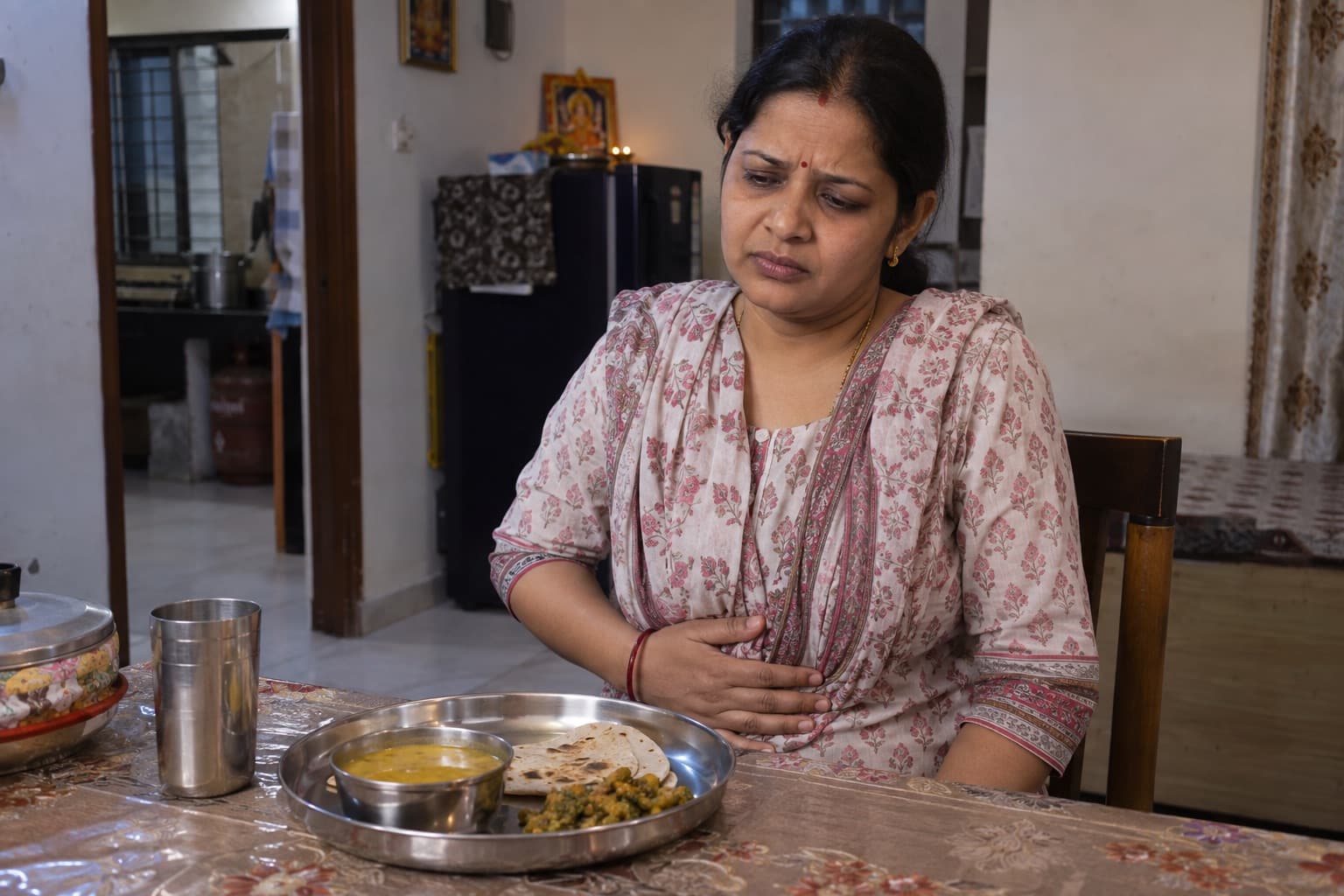
Describe the feeling and its location
Indigestion can cause burning or discomfort in the upper abdomen, early fullness, bloating, nausea or belching. Heartburn is a burning sensation in the middle of the chest and may come with a sour taste. The two can occur together, but they are not identical. Note where you feel it and whether it is burning, pressure, pain or uncomfortable fullness.
Write down when it begins: while eating, shortly afterwards, when bending or when lying down. Add how long it lasts and whether food or bitter fluid comes back into your mouth. A symptom that follows a meal may suggest a digestive pattern, but timing alone cannot establish the cause or rule out a heart problem.
Look for a pattern without blaming every meal
For a few days, note the size and timing of meals, any food or drink that repeatedly seems to make symptoms worse, and whether you eat close to bedtime. You do not need to avoid an entire cuisine on the basis of one uncomfortable evening. NIDDK notes that particular foods may trigger symptoms for some people, even though specific foods are not thought to cause indigestion itself.
If symptoms are mild, smaller meals and leaving several hours between eating and bed may help with recurrent heartburn. Ask a pharmacist or clinician before relying on frequent medicines for relief, especially if you are pregnant or take regular medicines. Tell a clinician about painkillers such as ibuprofen, which can worsen indigestion; do not stop a prescribed medicine on your own.
Know when the pattern needs care
Arrange medical advice if the burning keeps coming back, occurs most days, does not improve, or comes with trouble swallowing, repeated vomiting or unintentional weight loss. Blood in vomit, black stools, or severe constant abdominal pain need prompt medical assessment. Bring your symptom notes rather than trying to label the condition yourself.
Sudden chest discomfort that does not go away, spreads to an arm, jaw, neck or back, or comes with sweating, nausea, light-headedness or shortness of breath needs immediate emergency help. Heart-related pain can feel like burning or indigestion, including after a meal. Our seven-question guide can help organise a non-urgent symptom story; it cannot tell whether chest pain is safe to ignore.
Explore your next step
Explore the after-meal burning guide →Sources: NIDDK — Symptoms and causes of indigestion · NHS — Indigestion · NHS — Heartburn and acid reflux · NHS — Chest pain