Sehatum journal
Knee locking or giving way: what exactly happened?
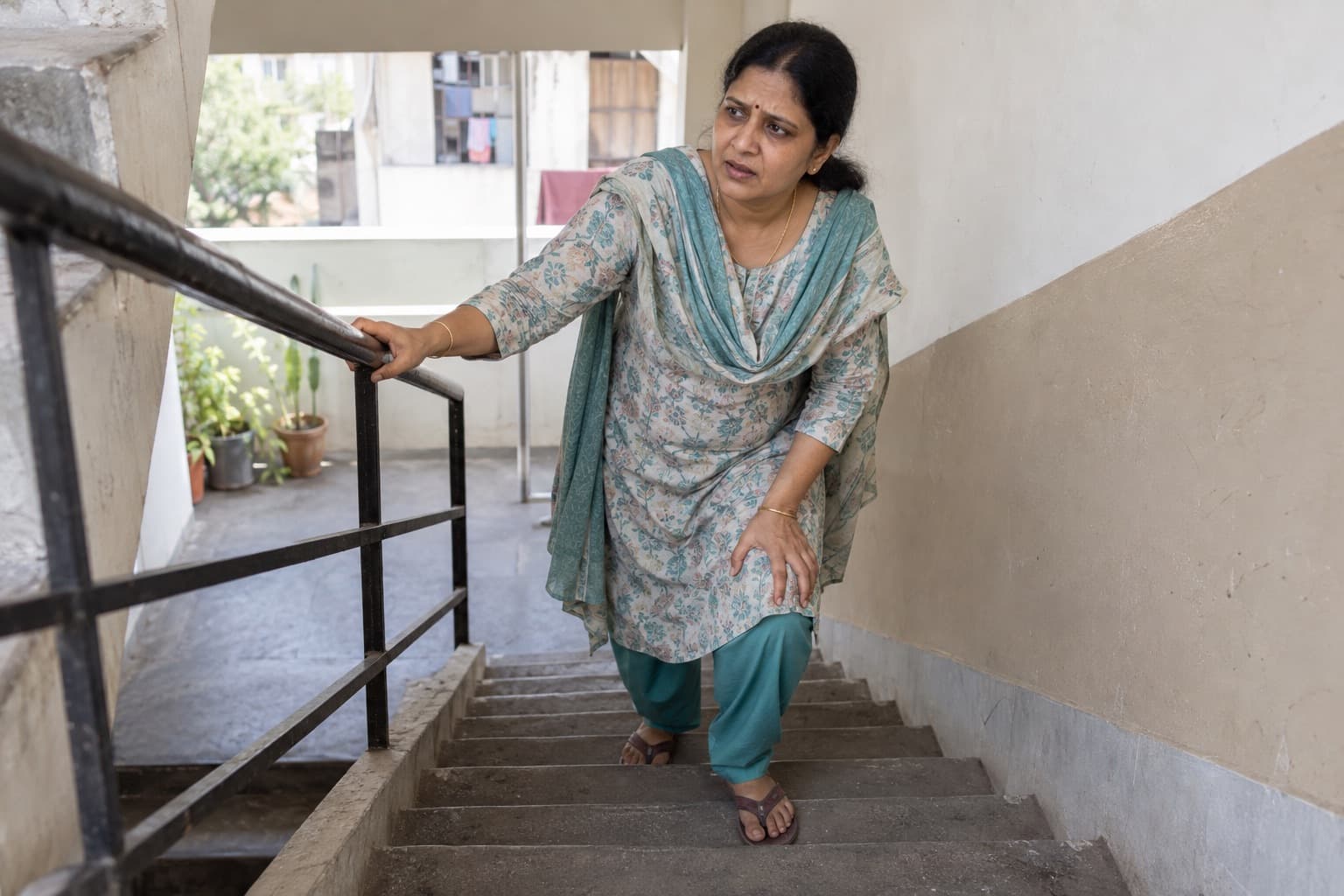
A knee that suddenly feels unreliable can change an ordinary walk into a worry about the next step. Before naming an injury, describe what the joint actually did. 'It clicked', 'it buckled' and 'I could not straighten it' do not mean the same thing.

Separate a sound from lost movement
The NHS says painless clicking is common. A click with pain, a knee that gives way, or a joint that locks deserves prompt medical advice. When you say 'locked', do you mean it briefly caught and then moved again, or that you physically could not bend or straighten it? That distinction changes how urgently it needs to be examined.
The NHS Bexley musculoskeletal service describes true locking as a knee stuck in one position that cannot be released. A meniscus injury is one possible explanation for catching, locking or giving way, but symptoms can overlap with sprains and other knee problems. Do not use the word 'meniscus' as a diagnosis from an online description.
Tell the story of one episode
What were you doing: turning with a foot planted, getting up from a squat, walking on level ground or using stairs? Did a fall or twist come first? Was there a pop, and did swelling appear immediately or later? Say whether the knee actually buckled under your weight, whether you fell, and whether it happens again. This short account is more helpful than repeatedly testing the knee to reproduce the symptom.
If it gives way while travelling or at work, pause activities where a fall could hurt you and arrange a clinical assessment. An examination starts with your history and how the knee moves; a scan is not automatically needed. NHS Bexley notes that MRI findings can be incidental and need to be interpreted alongside the examination.
Know which next step cannot wait
Seek urgent in-person medical help today if you cannot move or bear weight on the knee, it is badly swollen or changed shape, or pain is severe. A hot knee with fever or shivering also needs urgent assessment. Do not force a knee that is stuck straight or bent, or rely on a self-check while you cannot walk safely. If the knee or leg is deformed or there is new numbness, use local emergency care.
Even if you can walk again, a knee that locks, gives way or clicks painfully warrants prompt advice rather than waiting for repeated falls. Mention how often it happens and what you can do between episodes. Our six-question knee guide can help you put a non-emergency story in order; it cannot examine the joint, diagnose a tear or decide whether you need imaging.
Explore your next step
Organise your knee symptoms →Sources: NHS — Knee pain · NHS — Meniscus tear · NHS Bexley MSK — Meniscal tear in the knee