Sehatum journal
Hair falling with an itchy or sore scalp: look at the skin too
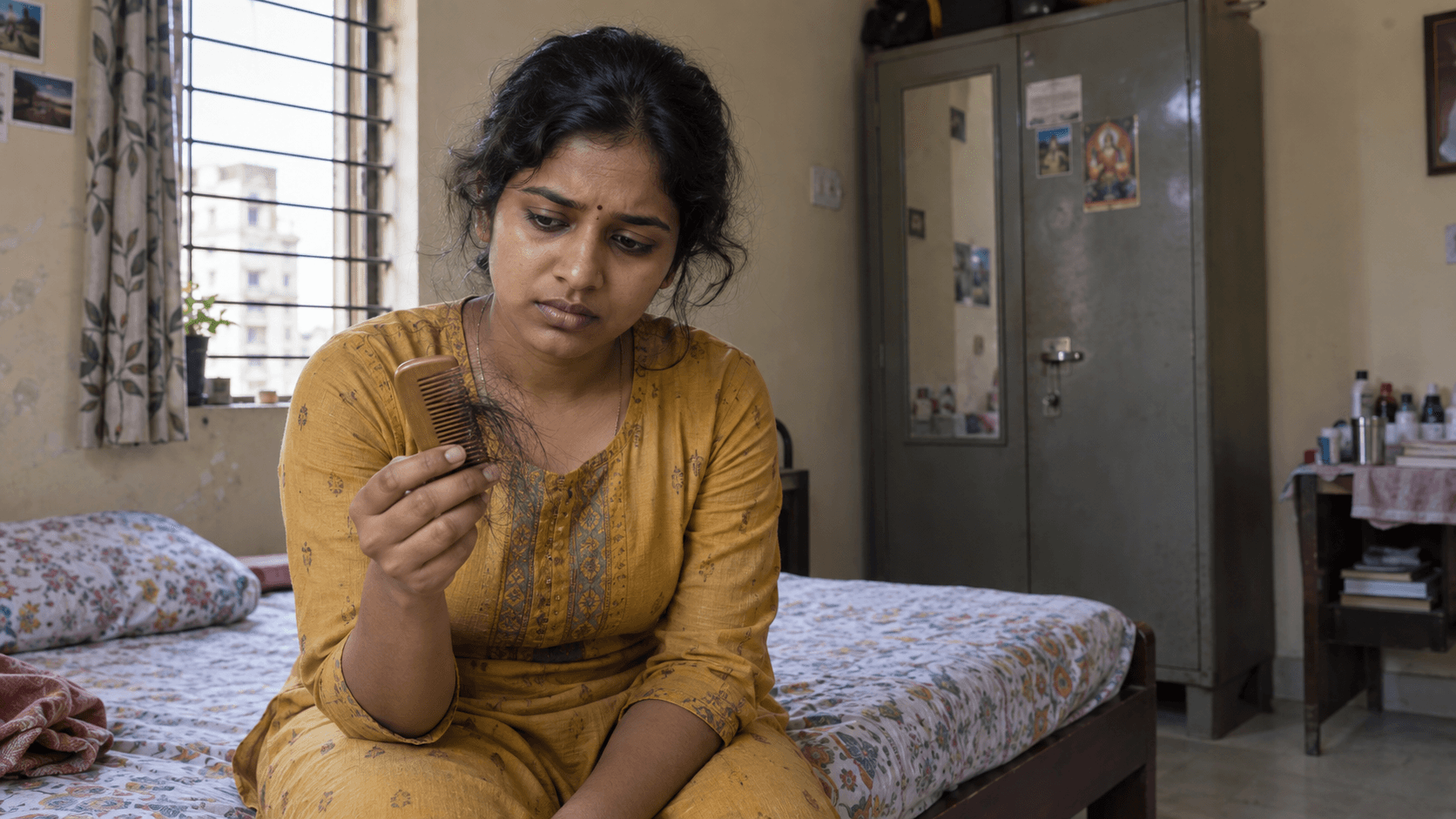
It is easy to count the hairs left in a comb and miss what is happening underneath them. If the scalp also itches, burns, flakes or feels tender, describe the skin as carefully as the hair. That can change which examination is useful.
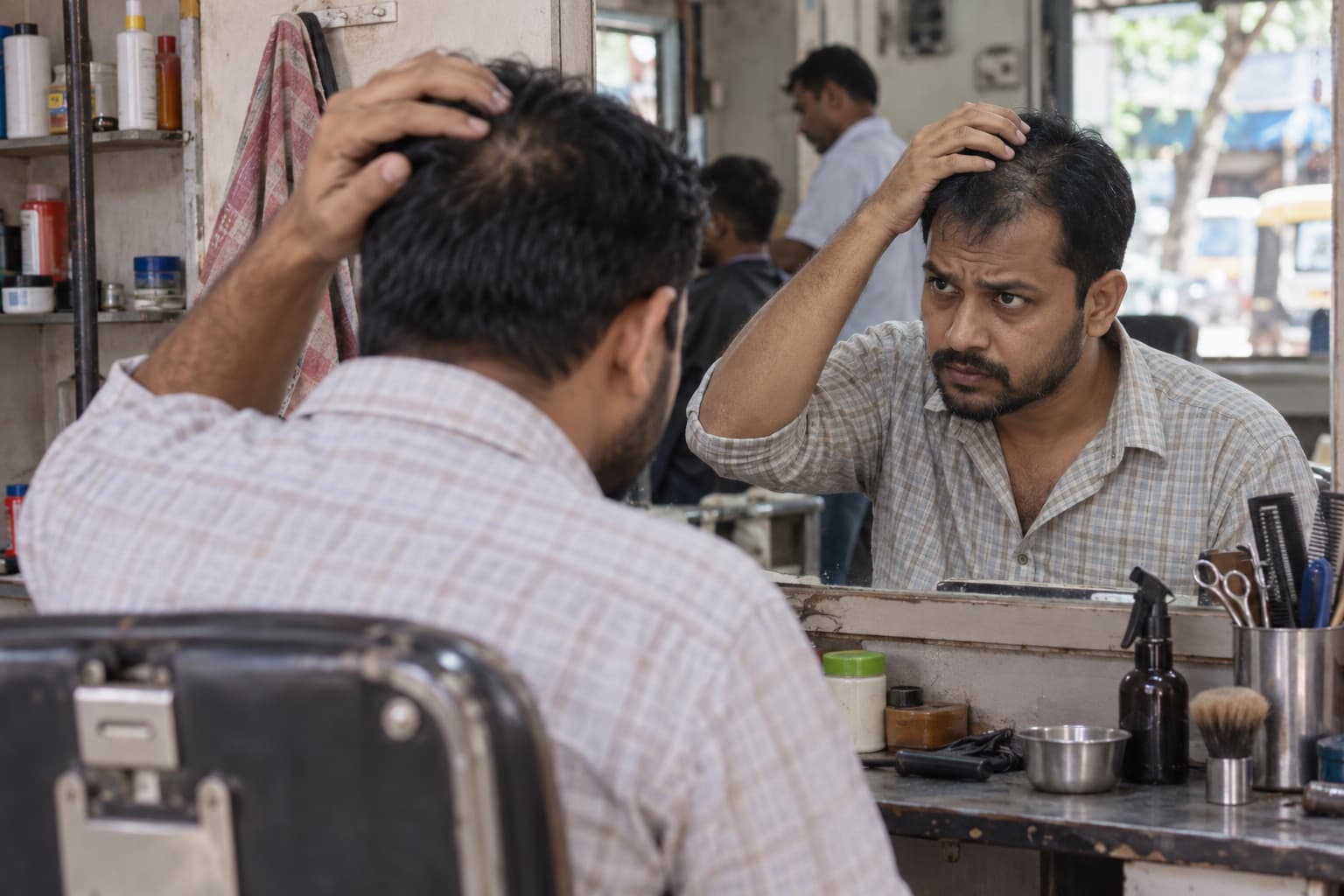
The scalp adds a different kind of clue
Notice whether the itch or soreness is everywhere or only where hair is thinning. Look for scale, broken hairs, a clearly bare patch, bumps or an area that is swollen or oozing. You do not have to scrape the skin or pull more hair out to inspect it. A photograph in ordinary light can help show a change over time, but it will not identify a disease.
The American Academy of Dermatology notes that intense itch, burning, tenderness or scaly bare patches can accompany some forms of hair loss, including scalp infections. Flakes alone can have several causes and do not prove an infection. Redness can be less obvious on brown skin; texture, pain and a new patch matter even when the colour change is subtle.
Do not turn every flake into the same treatment
A shelf of hair oils or shampoos can make the problem feel like a product choice. But a scaly patch with broken hairs is different from a few ordinary flakes. The NHS says ringworm on the scalp can cause patchy hair loss and usually needs prescription antifungal treatment. That does not mean every itchy patch is ringworm. A clinician needs to look at the scalp and decide what, if anything, to test.
If there is a new scaly bare patch, soreness, swelling, crusting or discharge, arrange an in-person visit rather than repeatedly trying a new product. If scalp ringworm is suspected, avoid sharing combs or towels until you have advice, since the NHS says it can spread through shared items. Do not blame poor hygiene: the question is which condition, if any, is present.
Make the appointment about skin and hair
Tell the clinician when you first noticed the hair change and whether itching, scale or pain began before or after it. Mention a new dye or hair product, any similar patches elsewhere, and what you have already applied. These details guide the examination; they do not diagnose the cause. If the area is worsening or you are worried, you do not need to wait for a large bald patch to ask for help.
Our five-question hair guide can help you put the pattern and scalp symptoms into words. It cannot inspect the skin or guarantee that hair will grow back. When the scalp is inflamed or painful, an in-person assessment is more useful than another online score or a guessed treatment.
Explore your next step
Explore the hair-and-scalp guide →Sources: American Academy of Dermatology — Hair loss signs and symptoms · NHS — Hair loss · NHS — Ringworm · American Academy of Dermatology — Causes of scalp itch