Sehatum journal
Hair shedding months after illness or stress: does the timing fit?
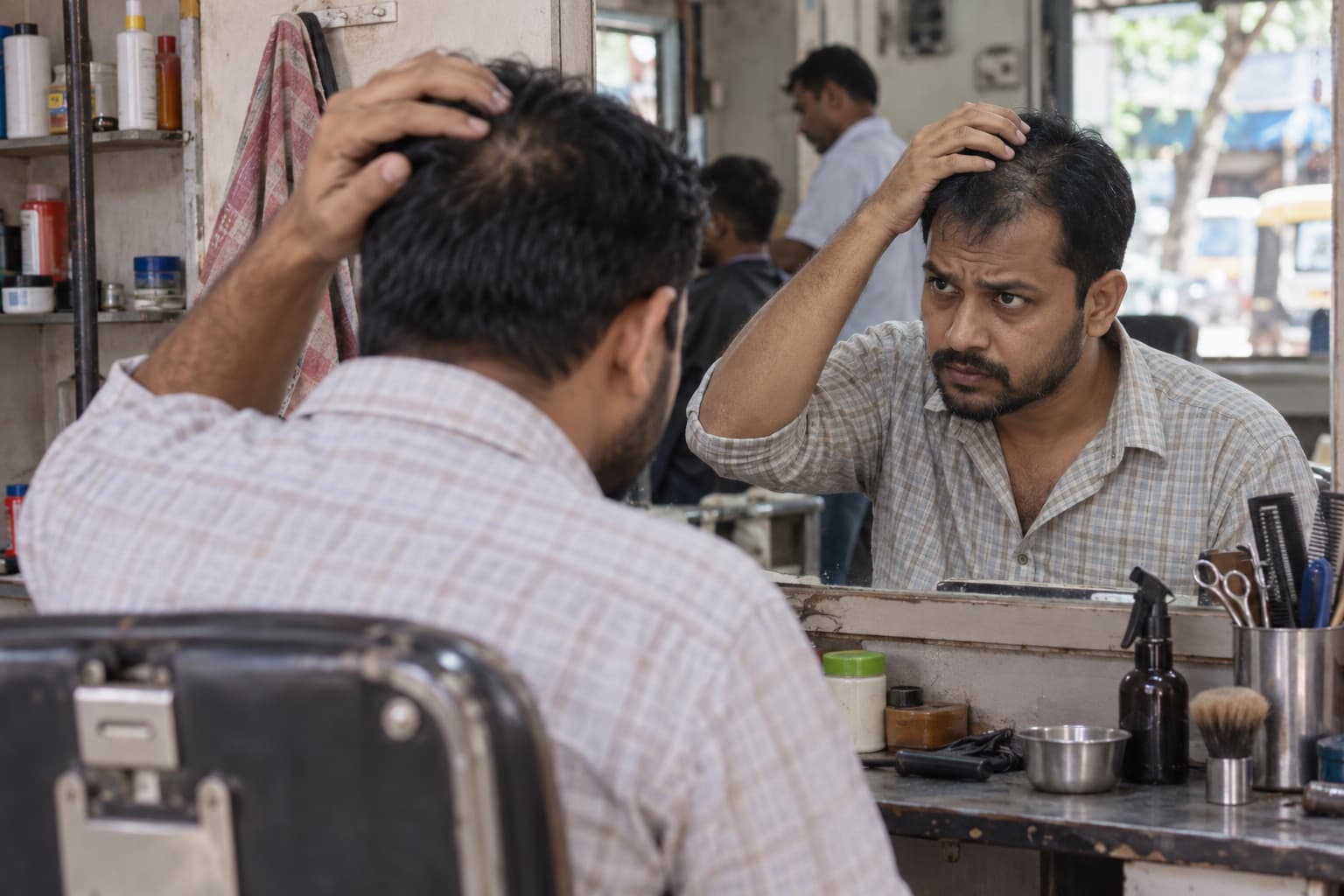
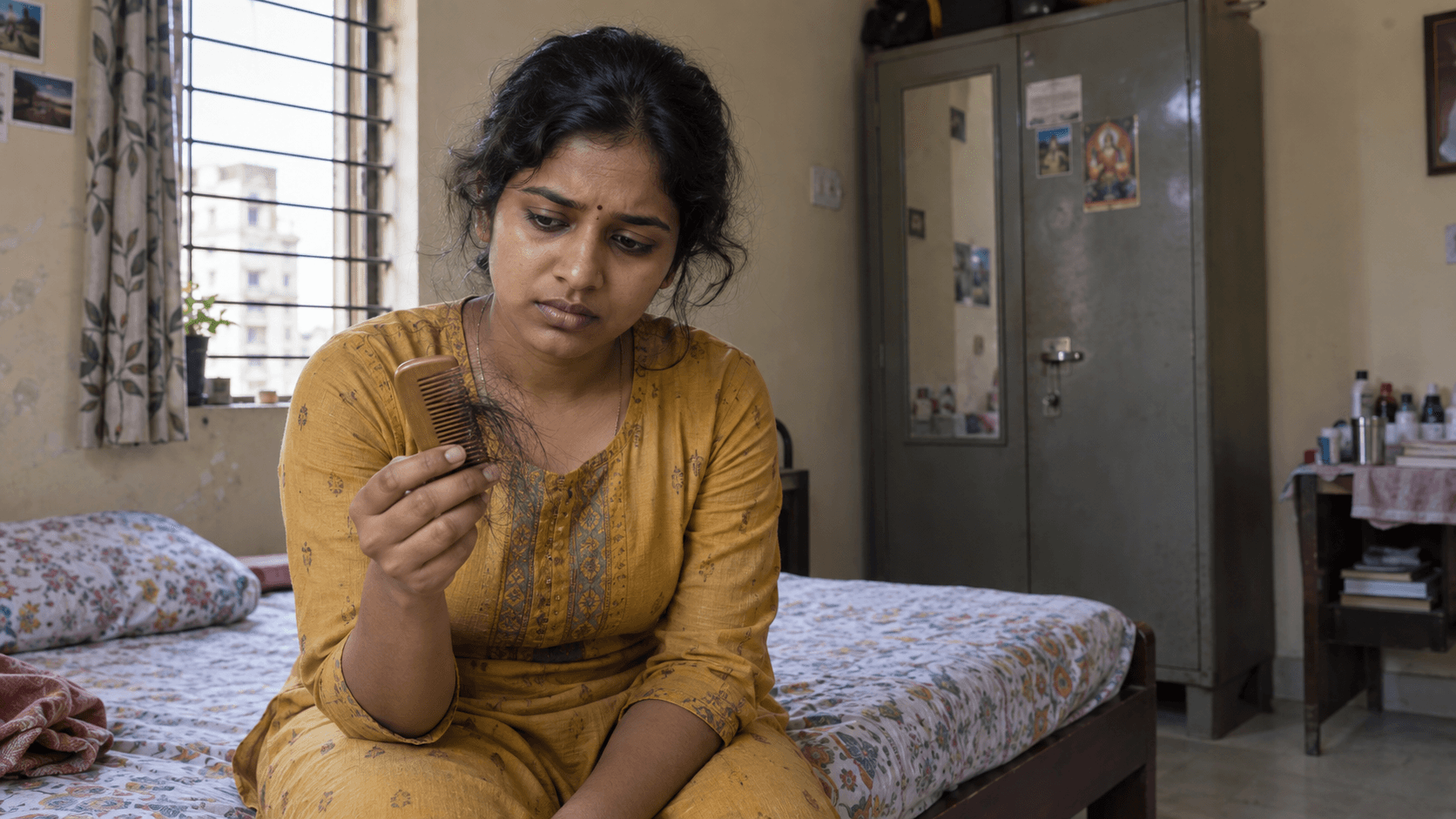
The fever has passed. Work has resumed. Then more hair appears in the comb. The gap can make the two events seem unrelated—or make one event feel like a certain explanation. Neither conclusion is safe from a calendar alone.

Look back, but do not force the story
The American Academy of Dermatology says noticeable shedding can begin a few months after high fever, illness, surgery, childbirth, substantial weight loss or severe stress. DermNet describes a similar delay in telogen effluvium, one pattern of diffuse shedding. Write down the month the shedding became noticeable and the month of any major health change. A rough sequence is more useful than trying to remember an exact day.
A recent illness is a clue, not a diagnosis. Medicines, nutritional problems, family-pattern thinning and scalp conditions can also matter. Several things may have changed at once; a stressful month does not cancel the need to consider another cause. Equally, do not assume that ordinary daily pressure caused hair loss because nothing else comes to mind.
Notice what the timeline cannot show
Is hair coming away from across the scalp, or is there a new bare patch or a parting that is steadily widening? Is the scalp itchy, sore or scaly? The hair pattern and scalp examination can change the question. Our separate article on scalp symptoms explains why a painful or flaky patch should not be treated as just another version of post-illness shedding.
Some temporary shedding improves after the trigger has ended, but a website cannot promise regrowth for your case or predict a date. Do not start iron or another supplement, change a prescribed medicine, or pay for a hair treatment on the strength of a guessed cause. A clinician can decide whether an examination or tests are useful after hearing the full history.
Bring two short lists to the appointment
One list is the sequence: illness or fever, surgery, childbirth, weight change or a difficult period, followed by when shedding started. The other is what is happening now: diffuse loose hairs or patches, scalp symptoms, medicines and whether the change is continuing. You do not need photographs of every comb or a daily hair count. If a photo helps, take it in similar light several weeks apart.
The NHS says worry about hair loss is itself a reason to ask a doctor for advice. Seek an examination if shedding continues, changes into patches, the scalp is inflamed, or the change affects your wellbeing. Our five-question hair guide can help organise a non-urgent conversation; it cannot tell whether a past fever was the cause or replace looking at the scalp.
Explore your next step
Organise your hair-loss timeline →Sources: American Academy of Dermatology — Hair shedding and hair loss · DermNet — Telogen effluvium · NHS — Hair loss