Sehatum journal
Does your walk to work count for diabetes risk?
A gym membership is not the measure of an active life. A walk to the bus stop, a trip to the market or hours spent moving at work may be the activity you actually have time for. The useful question is what that movement does for your health—and what a diabetes risk score can and cannot capture.

Yes, a commute can be physical activity
The WHO counts movement for transport, work and home life as physical activity, not only exercise done for leisure. Walking to work can therefore contribute to an active week. Its intensity matters: a brisk walk that makes you breathe somewhat harder is different from a slow stroll with long stops. The CDC's rough ‘talk test’ says moderate activity lets you talk but makes singing difficult.
For adults, the WHO recommends at least 150 minutes of moderate-intensity activity across a week; more can bring further benefits. This is a public-health goal, not a pass-or-fail rule for one person's Tuesday. If that amount feels out of reach, some movement is still better than none. A short, repeatable stretch of walking may be more useful than an ambitious plan that does not fit your commute, safety or work hours.
A health benefit and a questionnaire answer are different
The original Indian Diabetes Risk Score asked whether someone exercised regularly in their free time and whether their occupation was physically demanding. It did not measure every minute of walking for transport. So a walk to work can matter for health without fitting neatly into either activity question on the score. Do not invent an answer just to get a lower-risk result.
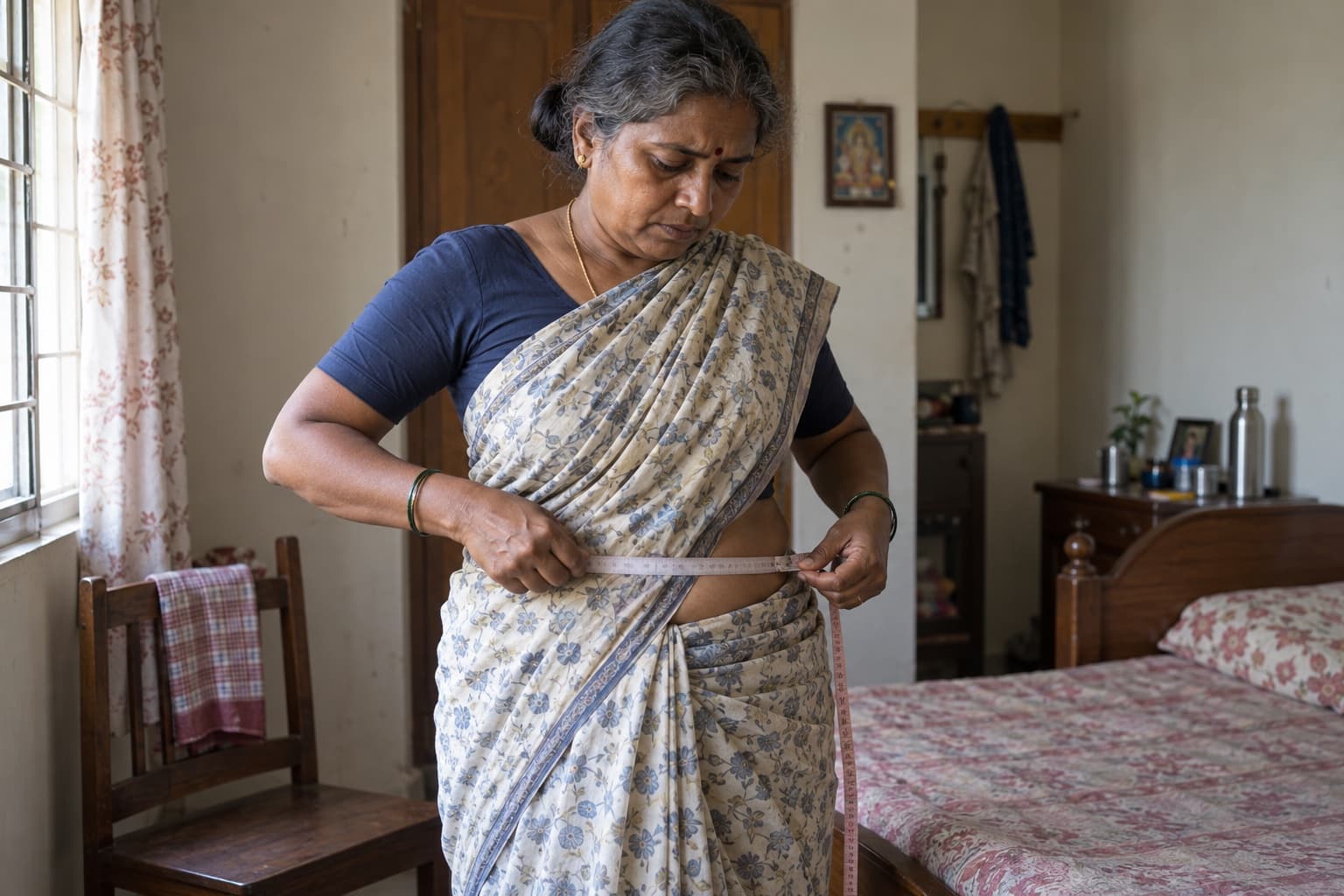
Our check uses the original score's broad activity categories. Think about your regular free-time exercise and the physical effort of your daily work when answering. If your main activity is a commute or unpaid household work and the options feel awkward, that is a limit of a short screening scale, not a failure on your part. Tell a clinician what your week actually looks like; the score cannot replace that conversation or a blood glucose test.
Build on your real week
Look at where walking is already practical: a safe part of the route, a regular errand, or a short break. Notice whether the pace makes you breathe faster, then add time gradually if your health and surroundings allow it. You do not need special shoes, a tracker or a gym to notice a steady habit. Do not walk along unsafe traffic or in heat that makes you unwell to meet a number.
Regular activity can help lower the risk of type 2 diabetes, but it cannot rule diabetes out. If you have unusual thirst, frequent urination or another reason to worry about blood sugar, ask a clinician about testing. The Indian diabetes risk check can help organise age, waist, family history and activity; it is a screening prompt, not a measurement of your glucose or a verdict on how hard you work.
Explore your next step
Explore the diabetes risk check →Sources: WHO — Physical activity · Original Indian Diabetes Risk Score study · CDC — Measuring activity intensity · WHO — Diabetes