Sehatum journal
Where should you measure your waist for this diabetes check?
A tape around the stomach sounds simple until two people place it at different heights. For this Indian diabetes risk check, the useful goal is a consistent measurement, not the smallest number you can make the tape show.
Use the waist, not the trouser line
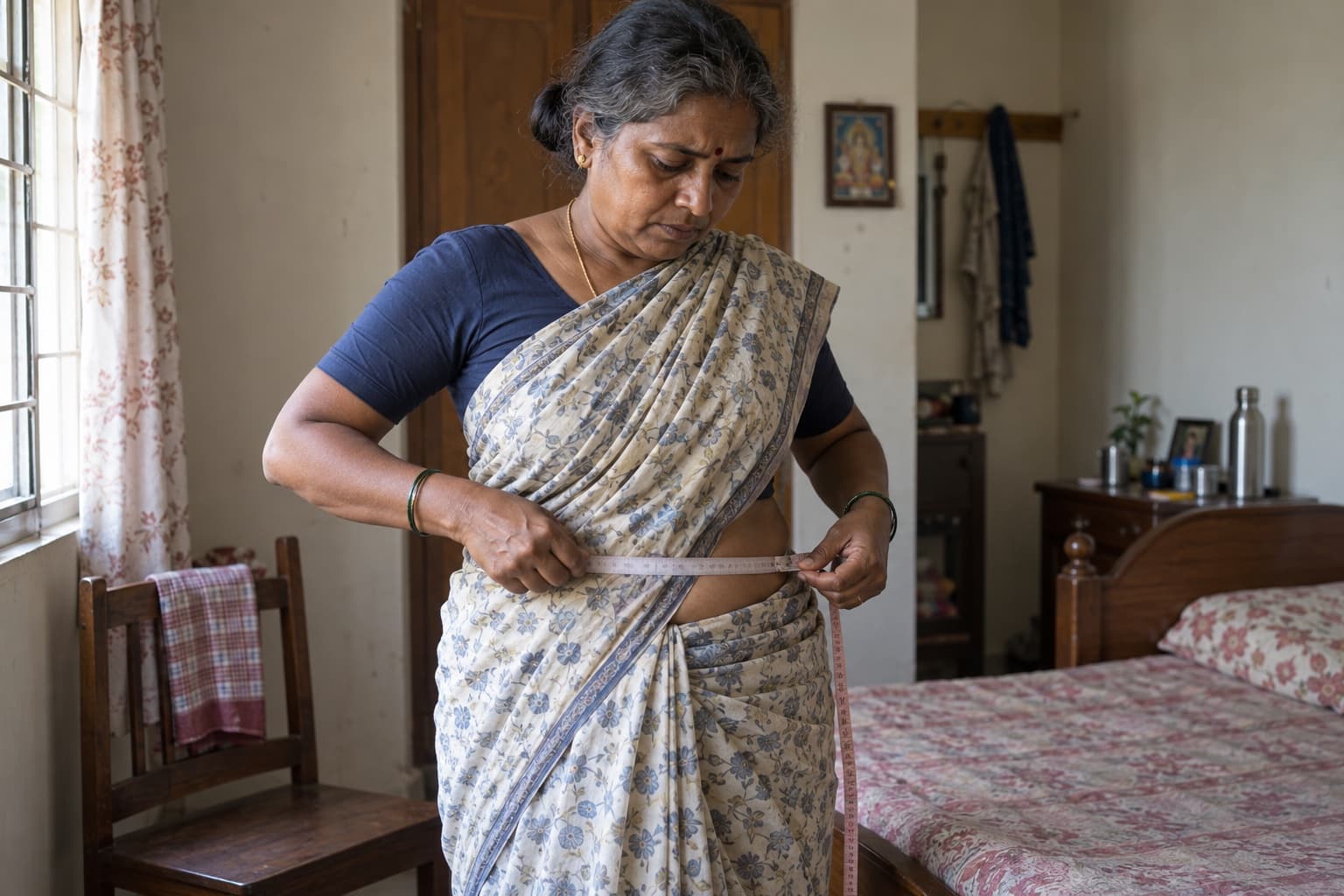
The original Chennai study behind the risk score measured the smallest horizontal circumference around the waist between the lower ribs and the top of the hip bones. It did not define the measuring point as the navel. Stand naturally with your feet together and arms relaxed. Find the lower edge of your ribs and the top of your hip bones; wrap the tape around the narrowest level between them.
Different health organisations and studies use different waist landmarks. The WHO describes a midpoint between rib and hip bone for its standard survey method. That is why two otherwise careful measurements may differ. For this questionnaire, follow the method used in the original Chennai study rather than switching between the navel, the trouser waistband and another point each time.
Let the tape lie flat
A tailor's tape that does not stretch is enough. Keep it level all the way around; a mirror or another person can help check the back. The tape should touch the body or a single light layer of clothing without squeezing the skin. Breathe normally and read it after a gentle breath out, without holding your stomach in.
If the tape slipped or you pulled it tight, measure again at the same place. Write down the number and whether you used centimetres or inches. If finding the level is difficult, a clinician can help measure it; guessing a ‘better’ number adds no useful information. This is a body measurement, not a judgement about how you look.
Know what the number cannot tell you
Waist size is one of several inputs in the Indian Diabetes Risk Score. The tape does not measure blood sugar and cannot show whether you have diabetes. The original score was designed to help decide who may need a blood test; the WHO says diagnosis uses blood glucose testing, not a waist measurement.
If you have symptoms such as unusual thirst or frequent urination, speak with a clinician about testing rather than waiting on an online result. If you are an adult within the check's intended group and want to organise your risk factors, you can use the diabetes risk check with your measurement. Its result remains a screening guide, not a diagnosis.
Explore your next step
Explore the diabetes risk check →Sources: CURES — Original waist-measurement method · IDRS — Original study · WHO — Waist circumference and waist–hip ratio · WHO — Diabetes