Sehatum journal
Diabetes in your family: what should you ask before a risk check?
If a parent has diabetes, it is useful to know before you complete a diabetes risk check. A short conversation at home can make your answer more accurate and give a clinician useful context, but family history alone cannot tell you whether you have diabetes.
Ask about each parent separately
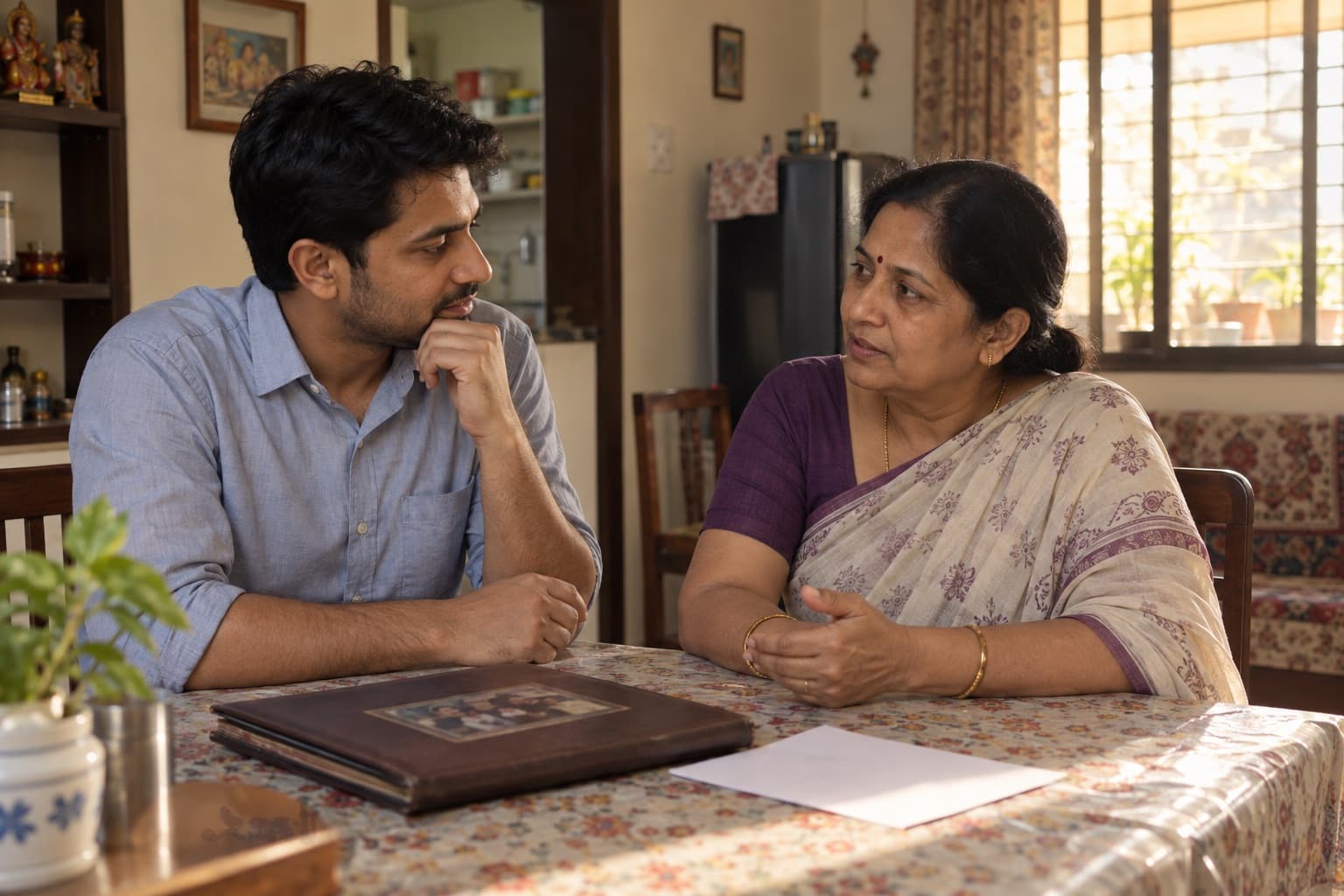
The Indian Diabetes Risk Score was developed in Chennai to help identify adults who may have undiagnosed diabetes. Its family-history question distinguishes between no parent, one parent and both parents having diabetes. Ask your mother and father, if possible, whether a clinician has ever told them they have diabetes. You do not need to know their current blood sugar reading to answer that question.
If a parent has died, lives elsewhere or cannot answer, another close relative may know. Avoid guessing. Our risk check has an ‘I don’t know’ option so you can return to it after you learn more. A missing answer is not proof of low risk.
Tell a clinician about more than the score asks
The score counts parents for this particular question; it does not count brothers, sisters or grandparents. That does not make the rest of your family history unimportant. The CDC recommends sharing what you know about close relatives’ conditions and, where possible, the age when they were diagnosed. Tell a clinician if a sibling or another close relative has diabetes, even though that person does not change this questionnaire’s parent answer.
You may not know whether a relative has type 1 or type 2 diabetes. Say what you know rather than assigning a type yourself. You can also mention any previous blood sugar result you were told was high and any symptoms you have noticed.
Family history is a reason to ask, not a verdict
A family history can raise risk, but it does not mean diabetes is inevitable. Having no known affected parent does not rule diabetes out. Age, waist size and physical activity are other factors in the Indian score, and only an appropriate blood test can assess whether you currently have diabetes.
If you have symptoms such as unusual thirst or frequent urination, ask a qualified clinician about testing instead of waiting for an online risk result. If you feel well but have a family history, ask whether you should be screened and when. The clinician can consider your whole situation rather than one family answer.
A useful note to take to an appointment
Write down which relatives have been diagnosed, roughly when they were diagnosed if known, any symptoms of your own and any past blood-test results. Unknown details can simply stay unknown. The purpose is to make the conversation clearer, not to produce a perfect family tree.
Explore your next step
Explore the diabetes risk check →Sources: Mohan et al. — Original Indian Diabetes Risk Score study · CDC — Family health history